What the Locker Room Knew That Your Group Chat Doesn't
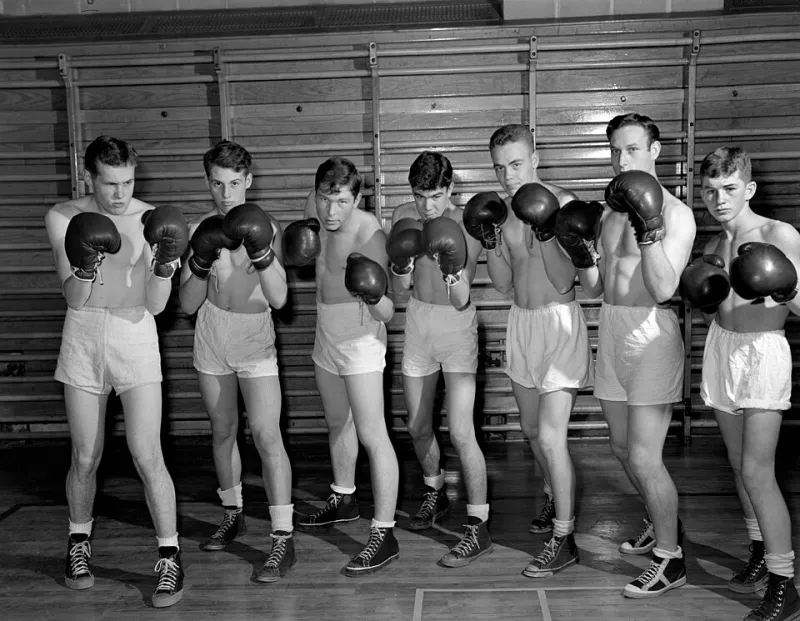
Photo: doe-oakridge, Public domain, via Wikimedia Commons
Think about the last room where you felt genuinely part of a team. For a lot of American men, the answer is somewhere between ages 14 and 22: a locker room that smelled like Bengay and old turf, where you knew your job, knew your boys, and knew that Friday night meant something you'd built together all week.
Then the whistle blew for the last time, and nobody handed you a replacement.
What's wild is how much we got for free back then and never appreciated. The locker room was a brotherhood machine — and most of us have spent the twenty years since trying to recreate it by accident. Let's break down what it actually gave us, and how to rebuild it without the coach.
Lesson One: Shared Suffering Beats Shared Interests
Nobody in the locker room bonded over liking the same stuff. They bonded over the third gasser of August two-a-days, over the ice buckets and the losses that stung until Tuesday.
Adult friendship advice is obsessed with "finding people with shared interests." Wrong framework. Interests are a conversation starter. Suffering is a bond. That's why your closest adult friendships are probably with guys you've moved furniture with, survived a wedding party with, or gutted through a brutal work stretch alongside.
The rebuild: put yourself in rooms that are hard. Tough Mudder, a rec league that actually keeps score, helping a brother move for the fourth time. Voluntary difficulty is the modern two-a-day.
Lesson Two: Everyone Had a Role, and Nobody Resented Theirs
On a team, you didn't have to be the star. You just had to know your role and own it. The backup catcher, the sixth man, the long snapper — the locker room honored them because the machine needed every part.
Adult male friendships fall apart over role confusion. Everybody wants to be the funny one, the leader, the fixer. Nobody's comfortable being the guy who just shows up and handles the details.
The rebuild: let your crew have defined roles and let guys keep them. Maybe you're not the one who organizes. Maybe you're the one who always drives, always hosts, always remembers birthdays. Own it. A crew where every man knows what he brings doesn't compete — it compounds.
Lesson Three: Accountability Was Built In, Not Awkward
Miss a practice in high school and you heard about it by third period. Nobody needed a difficult conversation framework. The standard was the standard, and your boys held you to it because your performance affected them.
Then adulthood made accountability weird. Now calling out a friend feels like a violation, so we say nothing while a brother slides — into drinking, into debt, into disappearing.
The rebuild: adopt the team rule. On a team, checking a teammate wasn't an attack; it was a requirement of membership. You can have that again. The crew that can say "you good? For real?" without it turning into a fight is the crew that lasts.
Lesson Four: Loyalty Had a Schedule
Here's the least romantic truth about locker room brotherhood: it happened on a calendar. Practice Tuesday, lift Wednesday, game Friday. Loyalty wasn't a feeling you had to summon — it was a structure you showed up to.
Grown men keep waiting to feel like hanging out. The locker room never waited for the feeling. It created the conditions, and the feeling followed.
The rebuild: put brotherhood on the schedule and treat it like practice. Standing game. Monthly dinner. Recurring anything. Structure isn't the enemy of closeness — it's the delivery system.
Lesson Five: The Jersey Came Off, But the Bond Didn't Have To
The saddest part of sports ending was never the games. It was the assumption that the bonds would somehow maintain themselves. They don't. Not because guys stop caring, but because the machine stopped running and nobody volunteered to rebuild it.
But here's the good news: you now have the blueprint. You lived it. You know exactly what a functioning brotherhood looks like — you were inside one at seventeen. Shared hardship. Clear roles. Real accountability. A schedule. That's not nostalgia. That's an instruction manual.
The whistle blew a long time ago. Nobody's coming to run the next practice.
So run it yourself. Send the invite. Set the date. Put the crew back on a schedule and give them something to grind through together. The locker room isn't a place you miss.
It's a machine you know how to build.